
Internal Quality Assurance Cell (IQAC)
Institutionalizing Continuous Excellence in Teaching, Learning, Research & Quality Culture at RVIT Autonomous
Ensuring Sustained Quality and Enhancing Excellence in Higher Education
At RVIT, we are committed to maintaining and enhancing the quality of higher education. To institutionalize our continuous improvement process, the Internal Quality Assurance Cell (IQAC) was established in 2018.
The IQAC is dedicated to creating a system of conscious, consistent, and catalytic action aimed at enhancing the teaching-learning process, refining evaluation procedures, and improving the overall quality of both students and faculty. Through regular internal audits, the IQAC reviews and supports our institution's ongoing efforts towards excellence.
Objectives
- To develop a system for conscious, consistent and catalytic action to improve the academic and administrative performance of the institution.
- To promote measures for institutional functioning towards quality enhancement through internalization of quality culture and institutionalization of best practices.
Functions
- Development of quality benchmarks for academic and administrative activities.
- Facilitating a learner-centric environment for quality education.
- Collection and analysis of feedback from all stakeholders (Students, Teachers, Employers, Alumni).
- Dissemination of information on quality parameters to all departments.
- Organization of workshops and seminars on quality themes and promotion of quality circles.
- Documentation of various programmes leading to continuous quality improvement.
- Development of a sustainable Quality Culture in the institution.
- Preparation and submission of the Annual Quality Assurance Report (AQAR).
Vision of the Institute
To impart quality engineering education and offer research opportunities to students with high standards, to serve as valuable resource for the advancement of society and organization, and impart students with ethical values to become great resource of pride for national and global needs.
Mission Statements of the Institute
| Mission No. | Mission Statements |
|---|---|
| IM1 | To implement state-of-the-art teaching learning process to our students to become resources for addressing industry and societal needs. |
| IM2 | To continue the development of infrastructure, provide latest equipment to our students with practical environment of learning, research, creativity, and innovation to become global professionals with ethical and moral values. |
| IM3 | To collaborate on projects with industry, not only to address local rural needs but also to imbibe knowledge to meet national and global needs. |
The IQAC is constituted under the chairmanship of the Head of the Institution with heads of key departments and distinguished stakeholders.
| S.No | Name | Designation | Role in IQAC |
|---|---|---|---|
| Chairperson | |||
| 1 | Dr. R.V. Krishnaiah | Principal | Chairperson |
| Management Members | |||
| 2 | Sri R. Vamsi Krishna | President | Member |
| Senior Administrative Officers | |||
| 3 | Dr. Shabana Sultana | HoD - H&S | Member |
| 4 | Dr. V. Dinesh Babu | HoD - CSE | Member |
| 5 | Dr. A. Rama Rao | HoD - CSE (AIML) | Member |
| 6 | Mr. M. Ambarisha | HoD - CSE (DS) | Member |
| 7 | Dr. S. Satheesh | HoD - ECE | Member |
| 8 | Mr. P. Nageswara Rao | HoD - EVT | Member |
| 9 | Dr. G. Sambha Siva Rao | HoD - MCA | Member |
| 10 | Dr. S. Mallikarjunaiah | Dean IQAC | Coordinator / Dean |
| 11 | Dr. K.V. Lakshmi | Controller of Examinations (COE) | Member |
| Senior Teachers | |||
| 12 | Dr. J. Narendra Babu | Professor, CSE | Member |
| 13 | Dr. A. Raghavendra Rao | Faculty, H&S | Member |
| 14 | Dr. Kaja Krishna Mohan | Asst. Professor, ECE | Member |
| 15 | Mr. Ch. Hari Babu | Faculty, H&S | Member |
| 16 | Mr. G. Maheswarao | Faculty, H&S | Member |
| 17 | Mr. A. Siva Prasad | Additional COE | Member |
| 18 | Mr. V.T.V. Kumar | Administrative Officer | Member |
| Employer / Industry / Stakeholder | |||
| 19 | Mr. G. Aditya | CEO, Adiverse Technologies | Industry Member |
| 20 | Mr. K. Deepak | Aspiron Tech | Industry Member |
| Alumni / Student / Local Society | |||
| 21 | Mr. K. Srinivas | EO, Chebrolu Panchayat | Local Society Member |
| 22 | Mrs. G. Tejaswini | Software Engineer at TCS | Alumni Member |
| 23 | Mr. A. Vijay | III Year B.Tech CSE | Student Member |
Framework Elements
- Comprehensive QA Policy & Institutional Guidelines
- Regular Stakeholder Feedback Analysis & Action Taken
- Continuous Academic Improvement & Pedagogical Training
- Annual Self-Assessment & Quality Audit Reports (AQAR)
Key Parameters
- Teaching-Learning & Continuous Outcome Evaluation
- Research Innovations, Patents & Extension Activities
- Digital Infrastructure & Modern Learning Resources
- Student Support, Mentoring & Career Progression
Best Practice I: Digital Empowerment in Education
Objectives:
- Create an ICT-enabled environment for enhanced teaching-learning experience.
- Develop a comprehensive digital learning platform with flipped classroom workflows.
- Implement cloud-hosted LMS for anywhere, anytime learning resource access.
- Enable automated assessment of Student Learning Outcomes (ESLO).
Key Initiatives:
- RVIT Campus Management System (CMS): Integrated academic and attendance tracking.
- e-ExamDesk: Automated examination and grading processes.
- BuildIT Coding Platform: Intensive coding assessments and placement preparation.
- Akanksha LMS: Cloud-hosted video lecture and courseware repository.
Impact & Outcomes:
Best Practice II: Skill Development & Entrepreneurship
Objectives:
- Provide industry-aligned technical skill development and CRT certifications.
- Foster an innovation and entrepreneurial mindset among engineering students.
- Promote an active research and patent filing culture among faculty and students.
- Attract seed funding and incubate societal engineering ventures.
Key Initiatives:
- SkillUP & SkillBridge Programs: Industry-specific training aligned with Top MNC stacks.
- Technology Innovation & Incubation Centre (TIC): On-campus startup incubation.
- RVIT-TBI | MSME Program: MoE/MSME approved host institute for student ideas.
- Maker Space & Prototyping Lab: Rapid hardware and IoT product fabrication.
Impact & Outcomes:
Rural Development & Community Empowerment
RVIT is uniquely dedicated to leveraging engineering education and technology transfer to empower surrounding rural communities in Guntur district, with particular focus on rural women entrepreneurs, digital inclusion, and agricultural innovation.
Rural Women Entrepreneurship (₹1.2 Cr Project)
Established in collaboration with the Department of Rural Development to foster self-reliance.
- Training in traditional crafts paired with modern digital design tools.
- Common Facility Center equipped with advanced packaging and fabrication tools.
- E-commerce platform developed by RVIT students for direct artisan sales.
- Empowered over 500+ rural women entrepreneurs.
Digital Literacy Outreach Program
Bridging the technological divide across adopted rural communities and schools.
- Hands-on training on digital banking, UPI payments, and government e-services.
- Basic computer coding workshops conducted for 50+ government rural schools.
- 2,000+ rural youth trained in fundamental digital skills.
Agricultural Technology Awareness
- Deployment of low-cost IoT soil moisture and smart irrigation sensors.
- Water conservation and drone-based crop health monitoring workshops.
- Demonstrated a 30% increase in crop yield efficiency in adopted pilot farms.
Community Health & Telemedicine
- Student-built telemedicine kiosks for remote doctor consultations.
- Over 10,000+ patients served across regular free medical and eye screening camps.
- Regular blood donation drives organized in partnership with Red Cross.
Institutional Governance & Vision
Strategic planning, statutory compliance (AICTE/UGC/JNTUK), decentralized administration, and financial auditing.
Accreditation & Continuous Auditing
NAAC A-Grade criteria adherence, internal quality audits, NIRF reporting, and stakeholder satisfaction analytics.
Academic Affairs & Curriculum
Curriculum design, Board of Studies (BOS) reviews, Academic Council ratifications, and modern pedagogy.
Outcome Based Learning (OBE)
Program Outcomes (POs), Course Outcomes (COs) attainment mapping, continuous assessment, and remedial mentoring.
Academic Research
Faculty publications in SCI/Scopus indexed journals and international conferences.
Sponsored Grants
R&D funding proposals to AICTE-RPS, DST-SERB, MSME, and collaborative industry research.
Intellectual Property
Active patent filing cell with 290+ published/granted patents and commercial transfers.
Placement & Training
CRT training, competitive coding, hackathons, and corporate campus hiring drives.
Innovation Center
Incubation support, prototype seed funding, and MoE IIC innovation challenges.
Industry Interface
MoUs, industrial visits, guest lectures by Fortune 500 tech leaders, and live internships.
IQAC collects structured feedback on curriculum and academic performance from all stakeholders to drive continuous syllabus modernization.
Feedback Analysis & Action Process
4-Phase Feedback Action Cycle:
- National-level Hackathon wins (Smart India Hackathon, Tech-Fests).
- International conference research presentations and journal co-authorship.
- High percentiles in GATE, GRE, IELTS, and AP PGECET examinations.
- Premium paid internships at Fortune 500 companies & Tier-1 startups.
Student Satisfaction Survey
The SSS is a crucial component of NAAC accreditation, focusing on Teaching, Learning, and Evaluation excellence. Your responses are direct, confidential, and drive meaningful campus improvements.
Take the Official NAAC SSS SurveyTakes approximately 5-10 minutes to complete.
Annual SSS Analysis Reports
SSS Report 2022-23
Download Complete Analysis →SSS Report 2021-22
Download Complete Analysis →NAAC 'A' Grade Accreditation
National Assessment & Accreditation CouncilOfficial accreditation letter and certificate from NAAC validating academic quality and institutional infrastructure.
View NAAC CertificateAICTE, UGC & AISHE Approvals
Statutory Bodies & University AffiliationAICTE Extension of Approval (EOA), UGC 2(f) & 12(B) recognition, SIRO certification, and JNTUK affiliation.
Minutes of IQAC Meetings
Regular quarterly meetings are conducted to review quality initiatives and execute action plans. Click on any academic year to view minutes:
Academic Audit Reports
Service Rules & Policies
View Institutional Service Rulese-Resources
- Institutional Member of DELNET
- National Digital Library (NDL) Access
- NPTEL / SWAYAM Video Lectures
- 10,000+ e-Books Collection
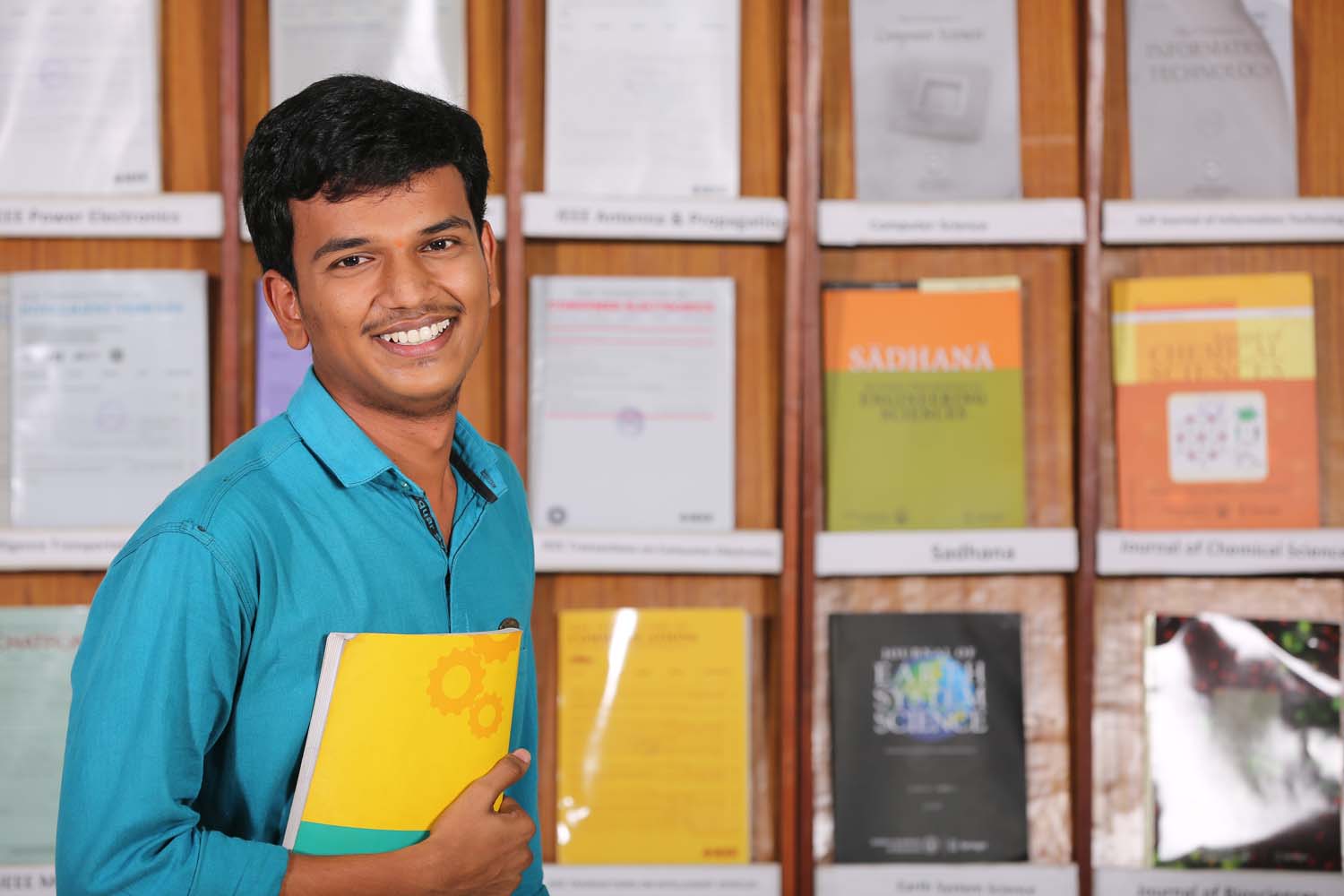
Journals & Periodicals
- National Printed Journals
- DELNET International E-Journals
- J-GATE Engineering E-Journals
- IEEE & Springer Digital Repositories
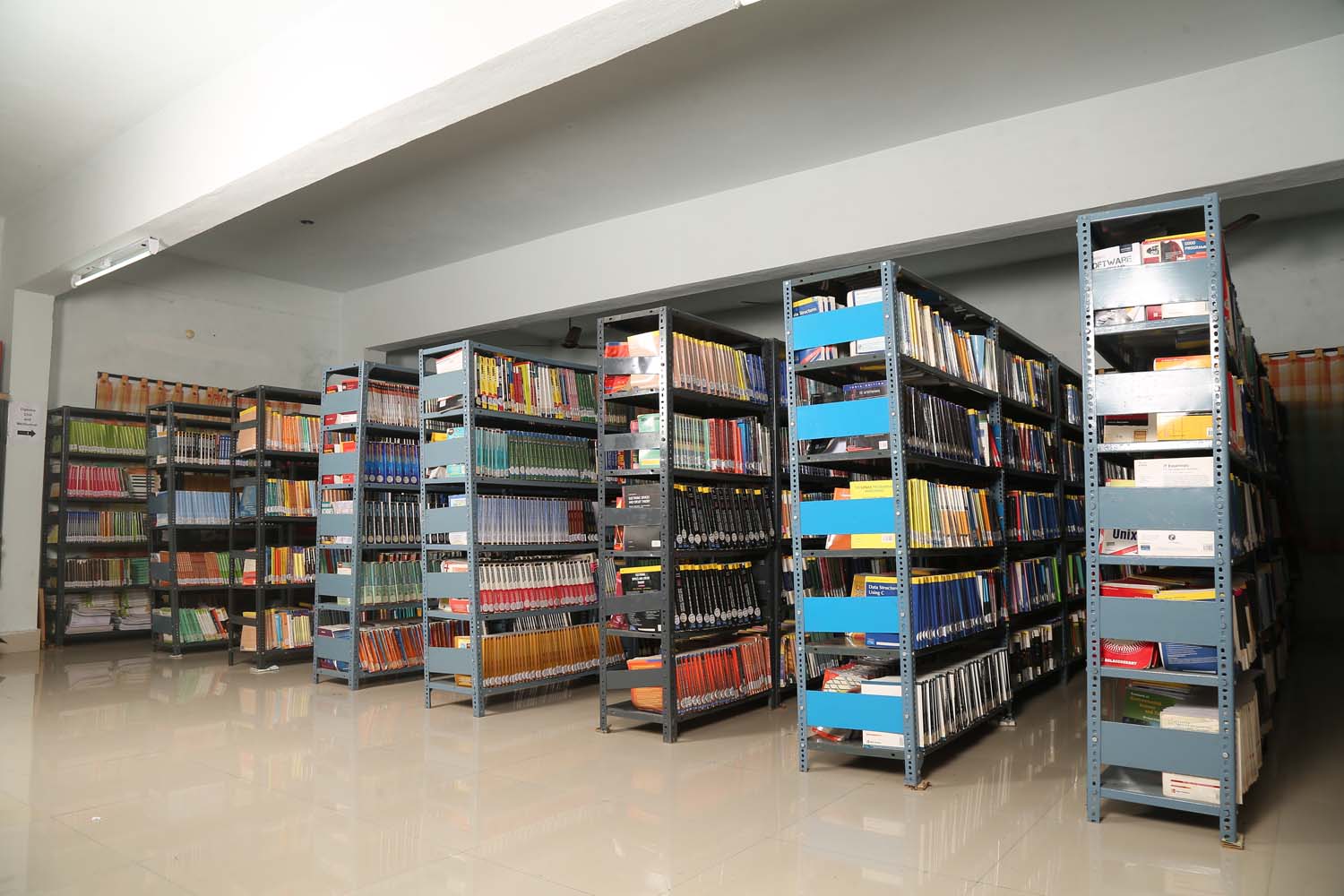
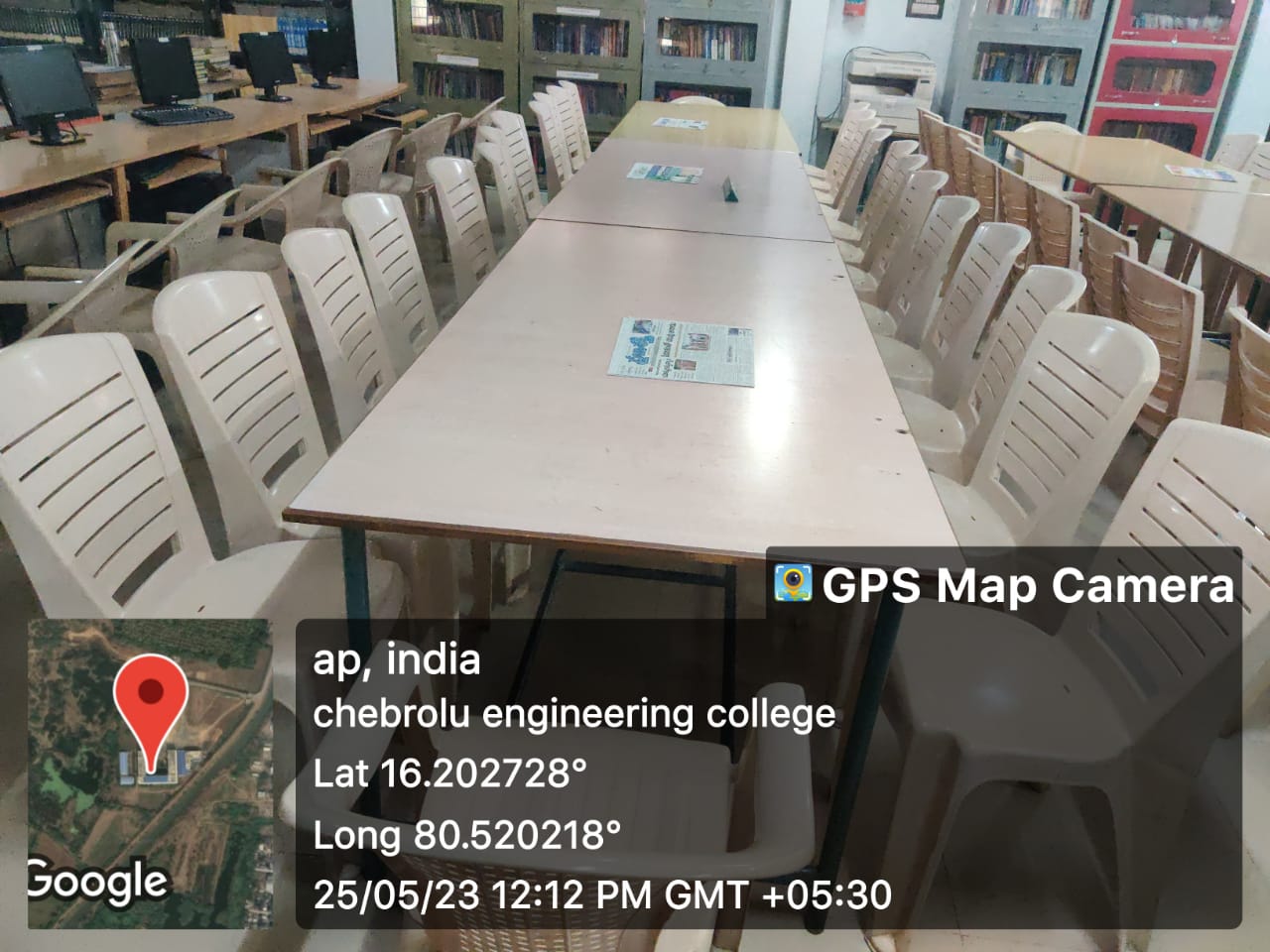
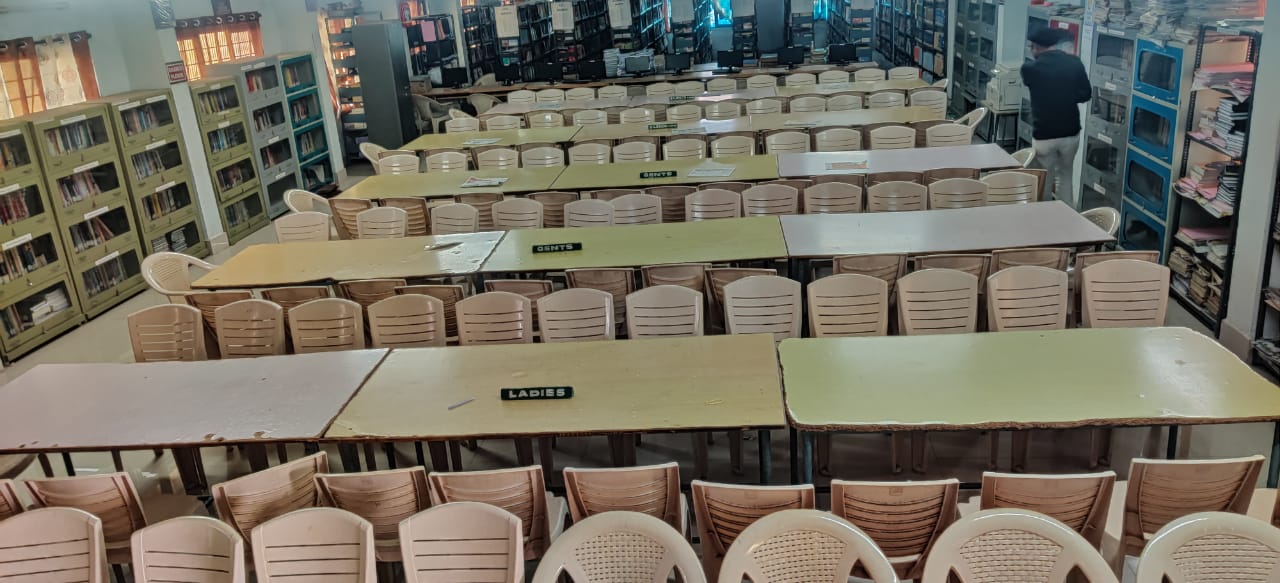
Digital Library & Facility
- NewGenLib Automated Library Software
- High-speed 20 Desktop PC Terminals
- Reprographic, Printing & Scanning
- Wi-Fi Enabled Reading Hall
| Central Library Books & Volume Distribution | |||
|---|---|---|---|
| S.No | Academic Program / Department | Titles | Volumes |
| 1 | Electronics and Communication Engineering (ECE) | 639 | 6,329 |
| 2 | Computer Science and Engineering (CSE) | 703 | 8,874 |
| 3 | Electrical and Electronics Engineering (EEE) | 464 | 836 |
| 4 | Humanities and Sciences (H&S) | 2,016 | 14,615 |
| 5 | CSE (Artificial Intelligence & Machine Learning) | 215 | 2,078 |
| 6 | CSE (Data Science) | 179 | 853 |
| 7 | Electronics Engineering (VLSI Design & Technology) | 257 | 1,229 |
| 8 | Master of Computer Applications (MCA) | 152 | 1,281 |
| Total Holdings | 4,625 Titles | 36,095 Volumes | |